Biography
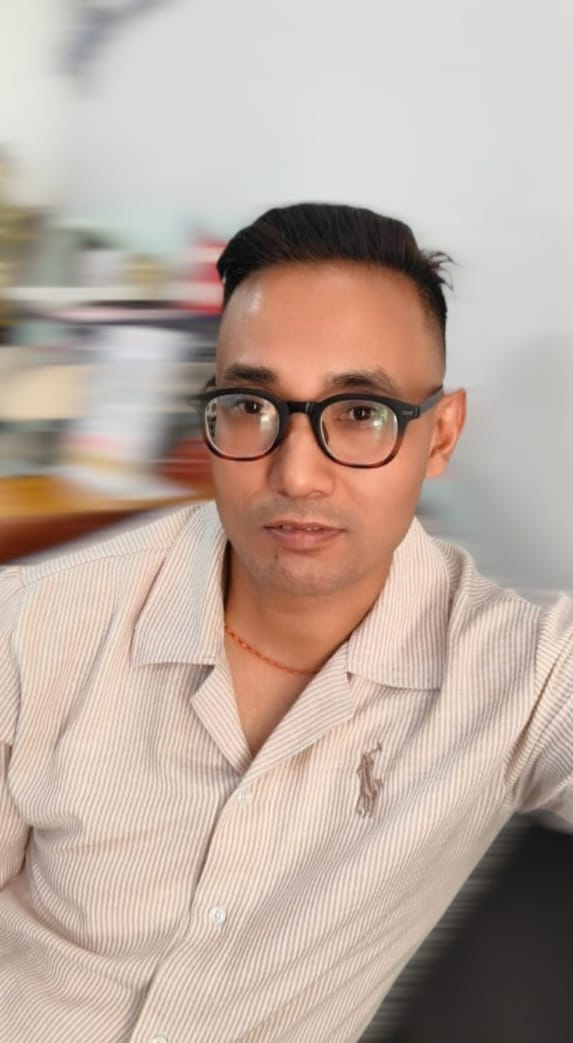
Saroj Bajracharya is a Nepali artist, art writer, curator, and educator with over three decades of contribution to Nepal’s contemporary art scene. Through his paintings, writings, exhibitions, curatorial projects, and teaching, he has contributed significantly to the development of artistic discourse and contemporary art practice in Nepal. His artistic work has been presented through numerous solo and group exhibitions in Nepal and internationally.
Known for his contemplative paintings and reflective writings on Nepali modern art, Bajracharya’s work explores identity, memory, impermanence, spirituality, and the evolving relationship between tradition and modernity. His practice brings together cultural memory, philosophical inquiry, and contemporary visual language, often examining the deeper psychological and existential dimensions of human experience.
Bajracharya is the author of Art Evolves: Nepali Modern Art and co-author of A Concise Introduction to Nepali Modern Sculpture. He has also written numerous articles and critical texts on art for newspapers and magazines, as well as catalogue essays and writings on the work of fellow artists. In 2008, he was selected to participate in a curatorial programme conducted through the Cultural Partnership Initiatives (CPI) in collaboration with the National Museum of Modern and Contemporary Art, South Korea, an experience that further broadened his engagement with international curatorial practice.
As a curator, he has initiated and developed a number of significant interdisciplinary art projects, including Future of History (2010–2011), Fables on the Floor (2016), Appearance of Light (2019), and Mythical Real: Narratives of Coexistence and Transformation (2026). These projects reflect his continuing interest in bringing cultural memory, mythology, contemporary thought, and diverse artistic practices into dialogue.
Alongside his artistic and curatorial work, Bajracharya has been actively involved in art education and critical writing, contributing to the broader understanding and appreciation of Nepali art. His multifaceted practice positions him at the intersection of art-making, art history, curatorial inquiry, and education, reflecting a sustained commitment to the growth and evolution of contemporary art in Nepal.